Best Keyword Research Tools for Agencies (Free and Paid)
 James Okafor
Feb 15 /
8 months ago
James Okafor
Feb 15 /
8 months ago

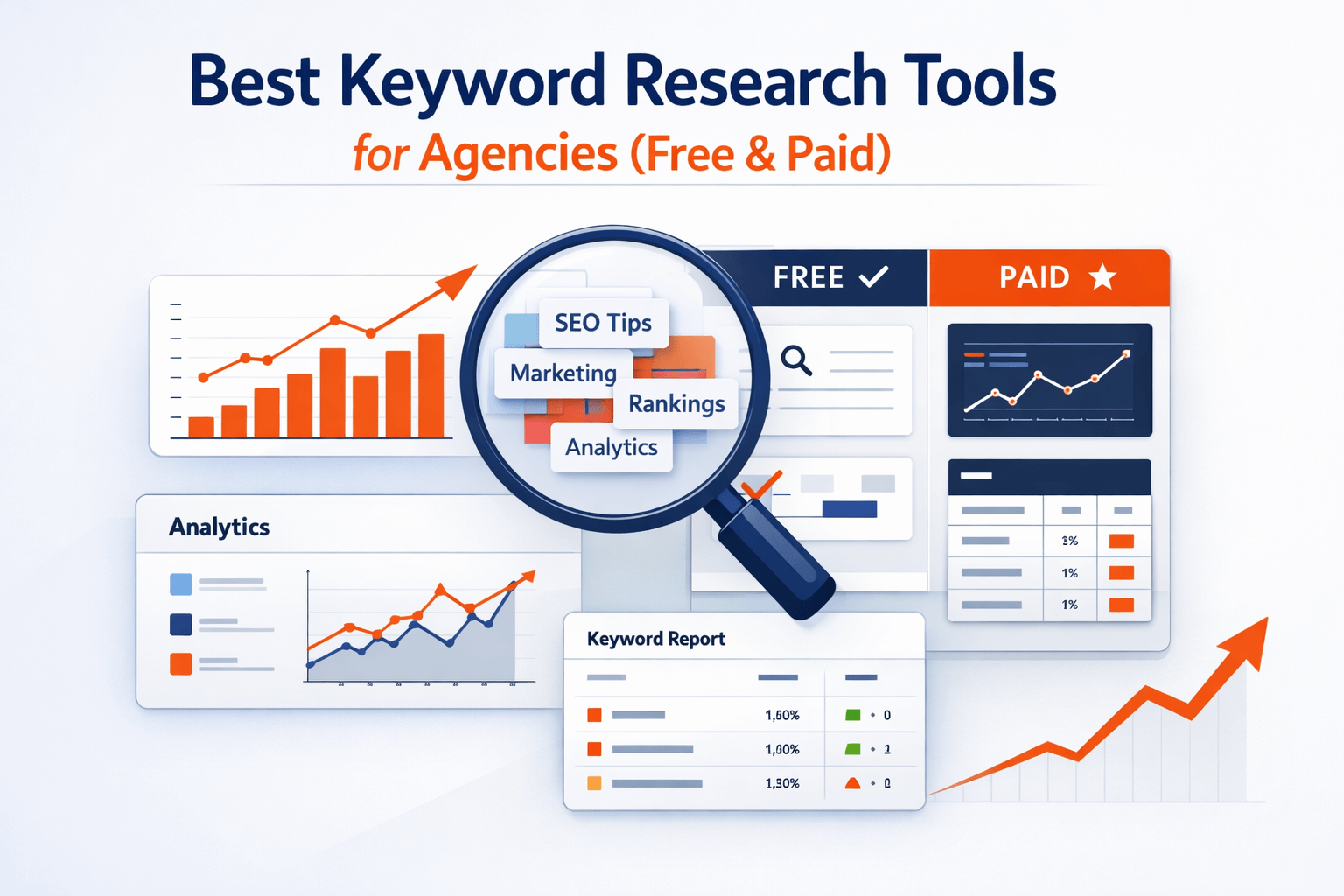
Introduction: Why Keyword Research Still Drives Agency Success in 2026
Keyword research is still the backbone of SEO even in 2026.
While AI tools, automation, and predictive analytics are transforming digital marketing, everything still begins with understanding what people search for. Once you have your target terms, a free website SEO checker can show how a client's site holds up on things like meta tags, speed and mobile friendliness, and all it needs is a web address.
For agencies managing multiple clients, keyword research is not just about finding high-volume terms. It’s about:
- Understanding search intent
- Identifying ranking gaps
- Building scalable content strategies
- Forecasting traffic growth
- Delivering measurable ROI
Without proper keyword research tools, agencies risk targeting the wrong audience, wasting budget, and losing competitive advantage.
Modern agencies now combine AI-driven insights (explored in our guide on 👉 AI SEO Tools That Can Boost Your Rankings in 2026) with structured keyword research workflows.
In this guide, we’ll break down:
- The best paid keyword research tools
- The best free alternatives
- How agencies use them
- Which tool fits different budgets
- And how to build a winning strategy
Let’s start with the basics.
What Are Keyword Research Tools?
Keyword research tools are software platforms that help you discover and analyze search terms people use on search engines like Google.
These tools provide data such as:
- Search volume
- Keyword difficulty
- Cost per click (CPC)
- Competition level
- SERP features
- Ranking potential
Agencies rely on these tools to guide content creation, landing page optimization, and PPC campaigns.
How Do Keyword Research Tools Collect Data?
Most tools pull information from:
- Google SERPs
- Clickstream data
- API integrations
- Historical ranking data
- Advertising platforms
According to Google’s official keyword guidelines, understanding user intent and relevance is more important than simply targeting high search volume.
That’s why advanced tools now focus on semantic analysis and intent clustering not just numbers.
Why Agencies Need Advanced Keyword Research Tools
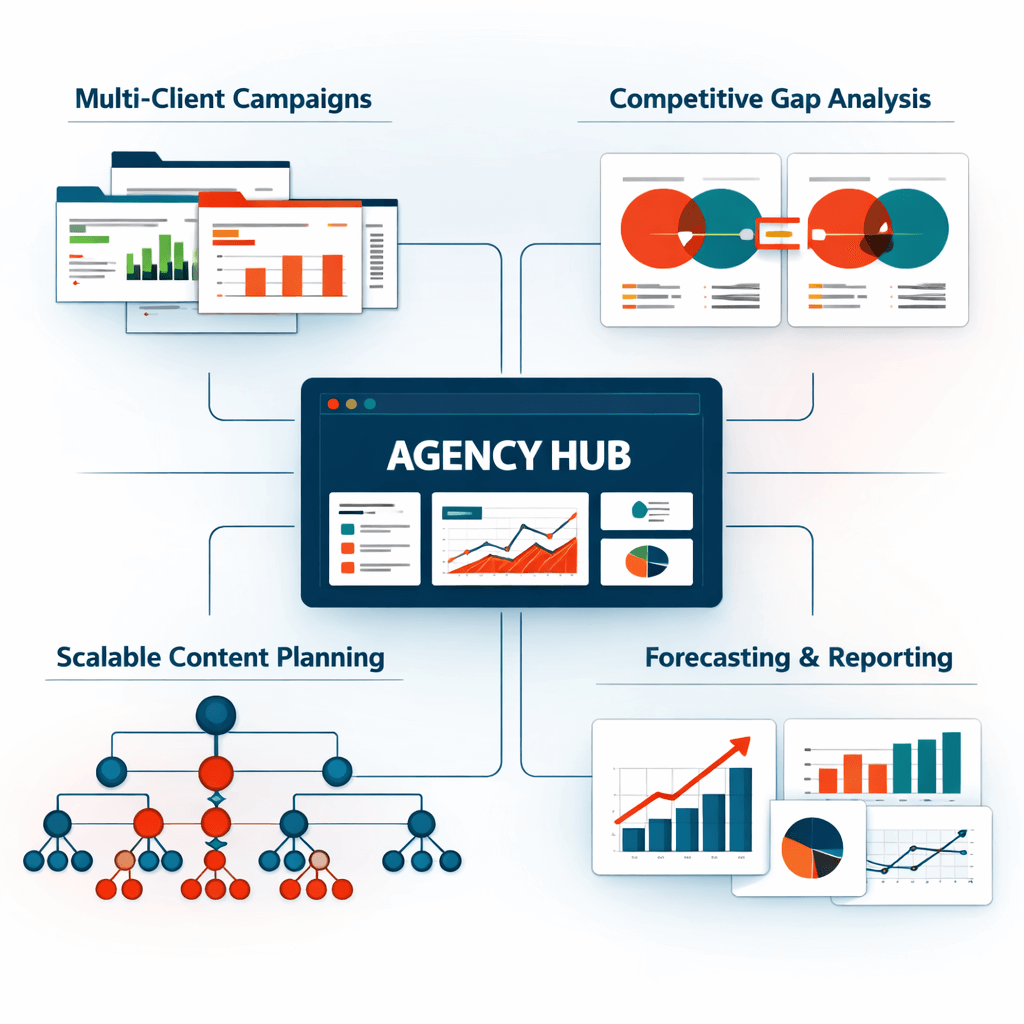
Managing one website is different from managing twenty.
Agencies need tools that support scale, efficiency, and reporting accuracy.
1. Multi-Client Campaign Management
Agencies often handle multiple industries at once. Tools must allow:
- Separate project dashboards
- Custom reporting
- Keyword grouping by client
2. Competitive Gap Analysis
Clients want to outrank competitors. Agencies must identify:
- Keywords competitors rank for
- Untapped opportunities
- Content gaps
3. Scalable Content Planning
Instead of targeting single keywords, agencies cluster topics and build authority.
For proper content architecture, you can follow: SEO-Friendly Website Structure: Hosting & Technical Setup Guide
Website structure directly impacts keyword performance.
4. Forecasting & Reporting
Clients expect results. Keyword research tools help predict:
- Traffic potential
- Ranking improvements
- Revenue projections
Without accurate data, reporting becomes guesswork.
Key Features to Look for in Keyword Research Tools
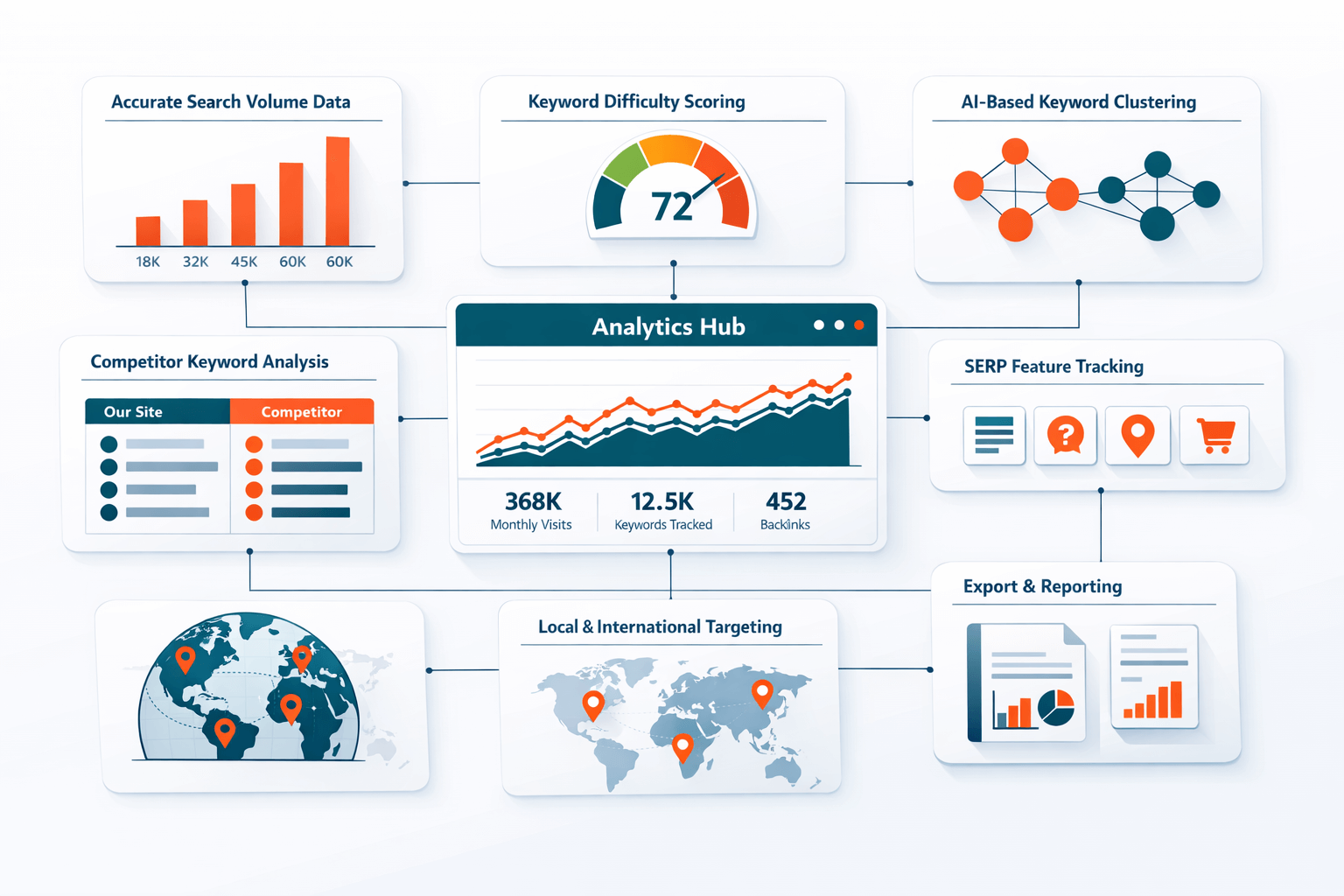
Not all keyword tools are created equal. Agencies should look for:
Accurate Search Volume Data
Reliable volume estimates help prioritize keywords.
Keyword Difficulty Scoring
Helps determine how competitive a keyword is.
AI-Based Keyword Clustering
Groups related keywords by search intent.
Competitor Keyword Analysis
Shows what your competitors rank for.
SERP Feature Tracking
Identifies:
- Featured snippets
- People Also Ask
- Local packs
- Shopping results
Local & International Targeting
Essential for agencies serving global clients.
Export & Reporting Capabilities
Automated reporting saves hours each month.
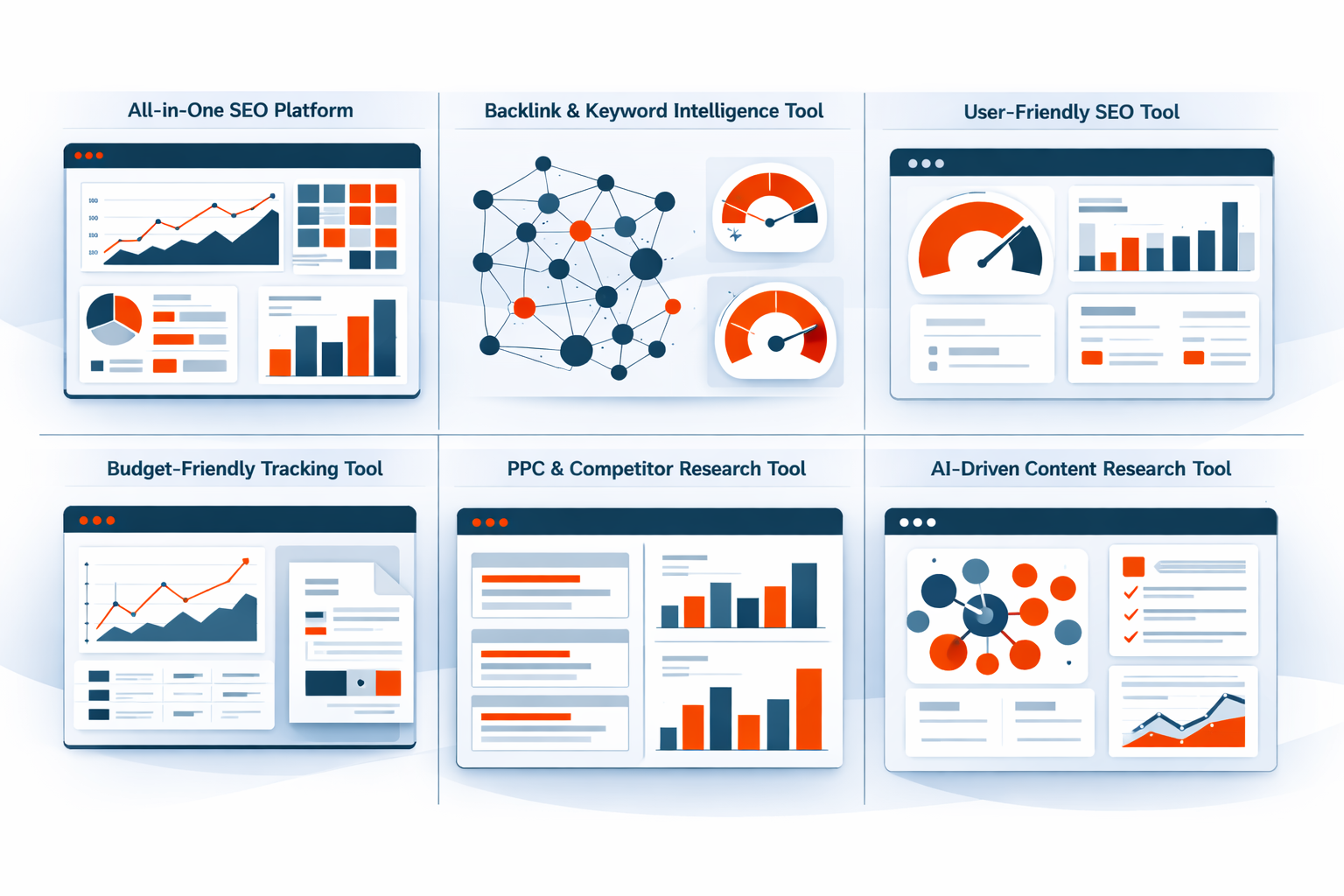
Best Paid Keyword Research Tools for Agencies
1. Semrush
Semrush is one of the most powerful all-in-one SEO platforms available.
It offers:
- Keyword Magic Tool
- Competitive keyword gap analysis
- Traffic forecasting
- PPC integration
Agencies love it for deep competitor insights.
However, pricing may be high for small agencies.
2. Ahrefs
Ahrefs is known for strong backlink data and keyword difficulty accuracy.
Its Keywords Explorer provides:
- Click metrics
- SERP overview
- Parent topic grouping
- Ranking history
It’s ideal for agencies focusing heavily on organic growth.
3. Moz Pro
Moz offers a user-friendly interface and solid keyword difficulty scoring.
It’s suitable for mid-sized agencies needing reliable data without overwhelming complexity.
4. SE Ranking
SE Ranking is more budget-friendly and popular among growing agencies.
It includes:
- Keyword tracking
- Competitor monitoring
- White-label reports
5. SpyFu
SpyFu excels in competitor PPC and SEO research.
It’s particularly useful for agencies managing both paid and organic campaigns.
6. Surfer (AI-Driven Research)
Surfer integrates keyword research with content optimization.
It focuses heavily on semantic keyword analysis and NLP-based recommendations.
It’s especially useful for content-heavy agencies.
Best Free Keyword Research Tools for Agencies
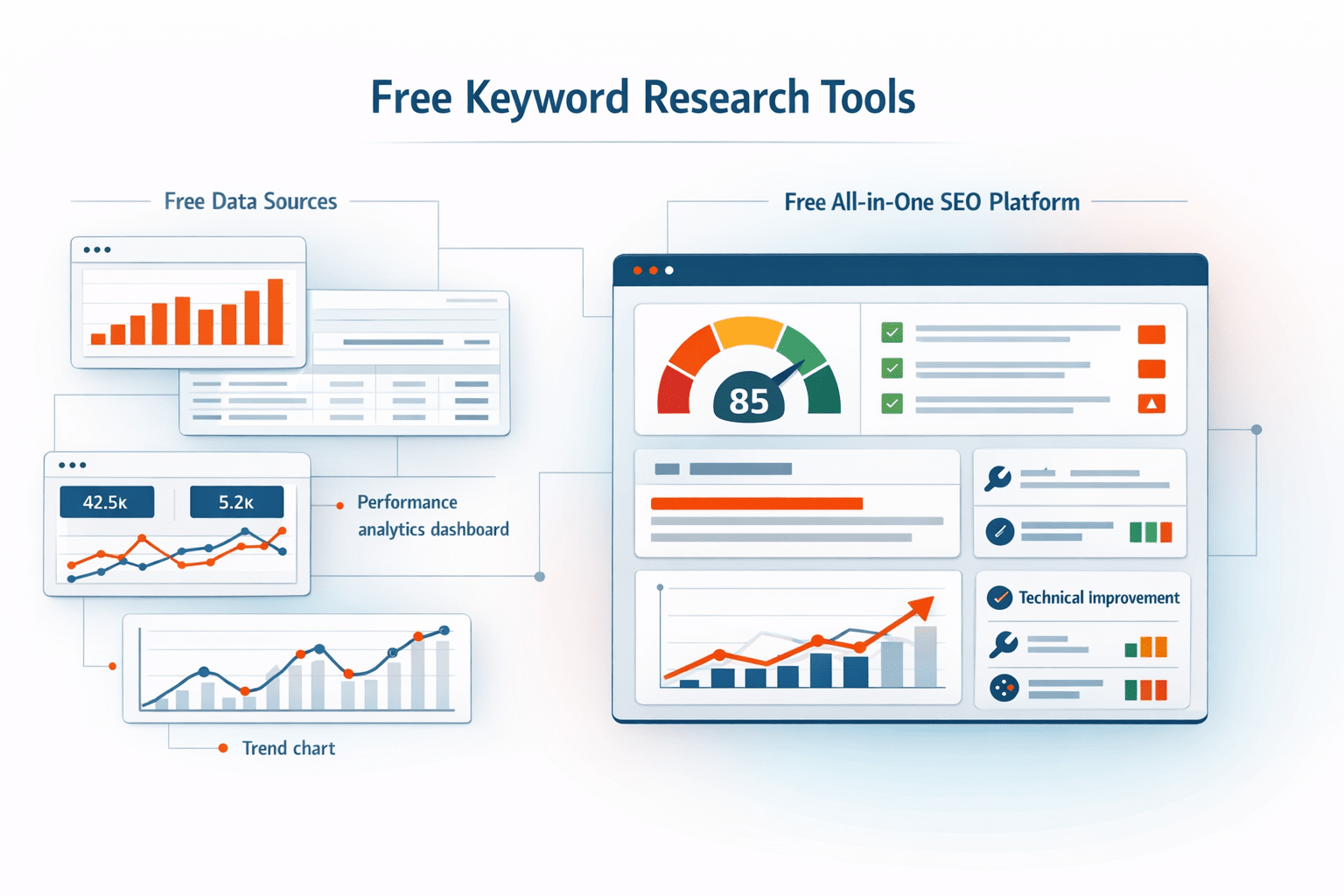
Not every agency needs expensive subscriptions.
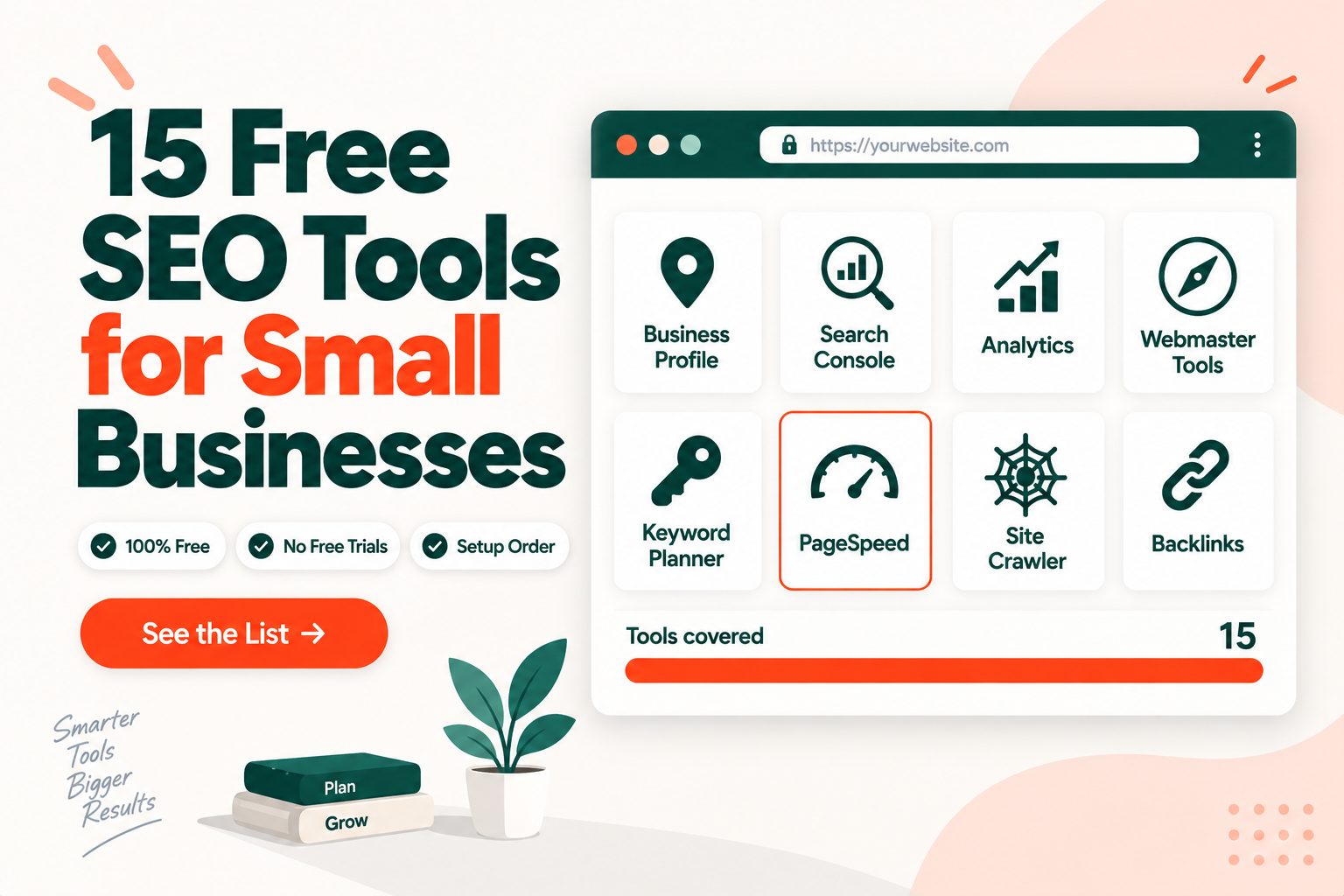
Here are powerful free tools:
1. Google Keyword Planner
Great for PPC-focused keyword research.
2. Google Search Console
Provides real performance data for existing rankings.
3. Google Trends
Helps identify rising topics and seasonal trends.
4. SEO Site Checker (Best Free Alternative)
If you want a beginner-friendly, completely free platform to analyze website SEO performance and identify keyword-driven optimization opportunities, start with:
SEO Site Checker provides:
- SEO score insights
- Website audits
- Meta tag analysis
- Technical improvements
It’s ideal for freelancers and smaller agencies that want clarity without enterprise pricing.
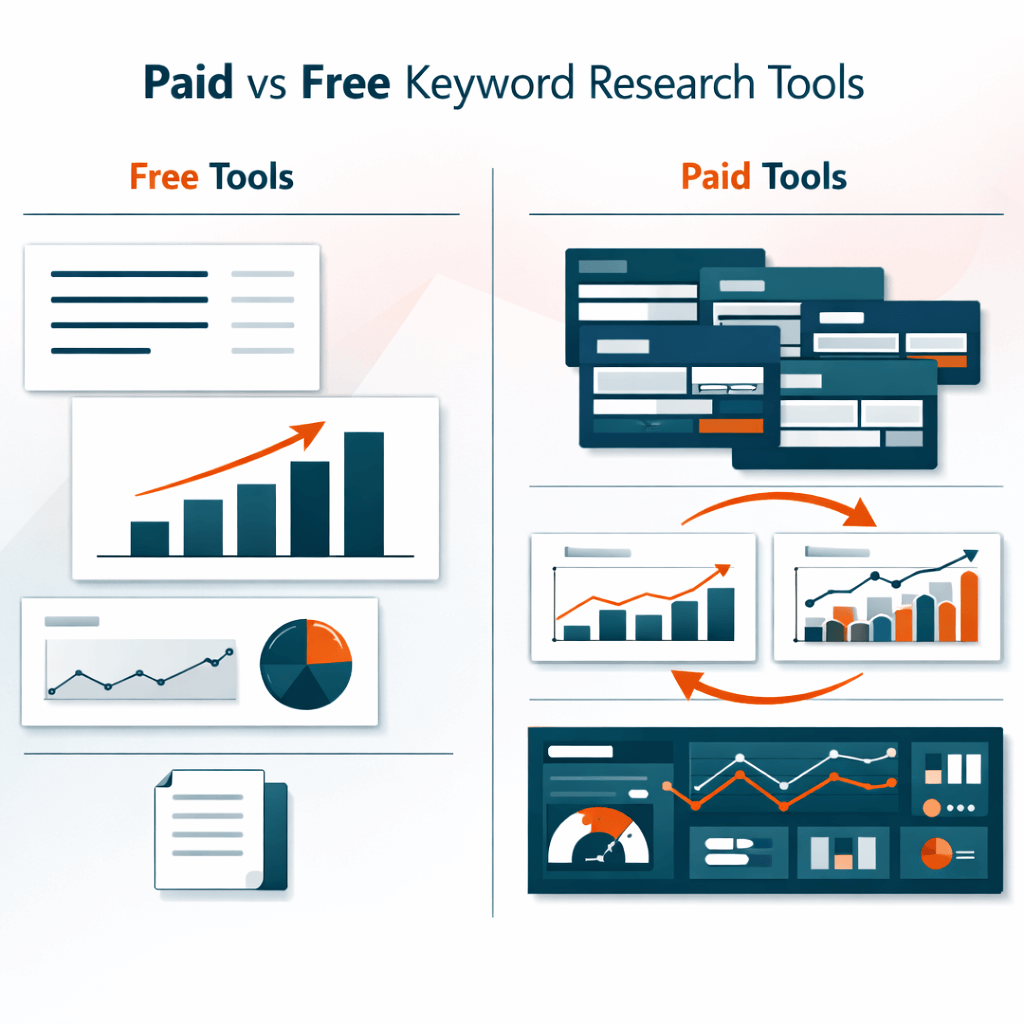
Paid vs Free Keyword Research Tools: Which Is Better?
Choosing between free and paid tools depends on agency needs.
Free Tools Are Best For:
- Small agencies
- Budget-conscious startups
- Basic keyword research
- Learning fundamentals
Paid Tools Are Best For:
- Large client portfolios
- Competitive industries
- Advanced reporting
- Automated workflows
| Feature | Free Tools | Paid Tools |
|---|---|---|
| Data Depth | Basic | Advanced |
| Competitor Insights | Limited | Comprehensive |
| Reporting | Manual | Automated |
| API Access | No | Yes |
| Scalability | Limited | High |
Many agencies combine both.
How Agencies Use Keyword Research Tools Strategically
Step 1: Analyze Client Goals
Identify whether the goal is:
- Lead generation
- Brand awareness
- E-commerce sales
- Local traffic
Step 2: Generate Seed Keywords
Use tools to find related long-tail keywords.
Step 3: Cluster by Search Intent
Group keywords into:
- Informational
- Transactional
- Commercial
- Navigational
Step 4: Perform Competitive Gap Analysis
Identify opportunities competitors are missing.
Step 5: Map Keywords to Website Structure
A clear content hierarchy boosts rankings.
Follow: SEO-Friendly Website Structure: Hosting & Technical Setup Guide
Step 6: Monitor & Optimize
Track rankings and refine strategy monthly.
Keyword Research Mistakes Agencies Should Avoid
Even experienced agencies make mistakes.
Targeting Only High-Volume Keywords
High search volume often means high competition.
Ignoring Search Intent
Ranking for the wrong intent leads to poor conversions.
Not Clustering Keywords
Single-keyword targeting is outdated.
Ignoring SERP Features
Featured snippets and People Also Ask affect click-through rates.
Relying Only on AI
AI assists research but cannot replace strategic thinking.
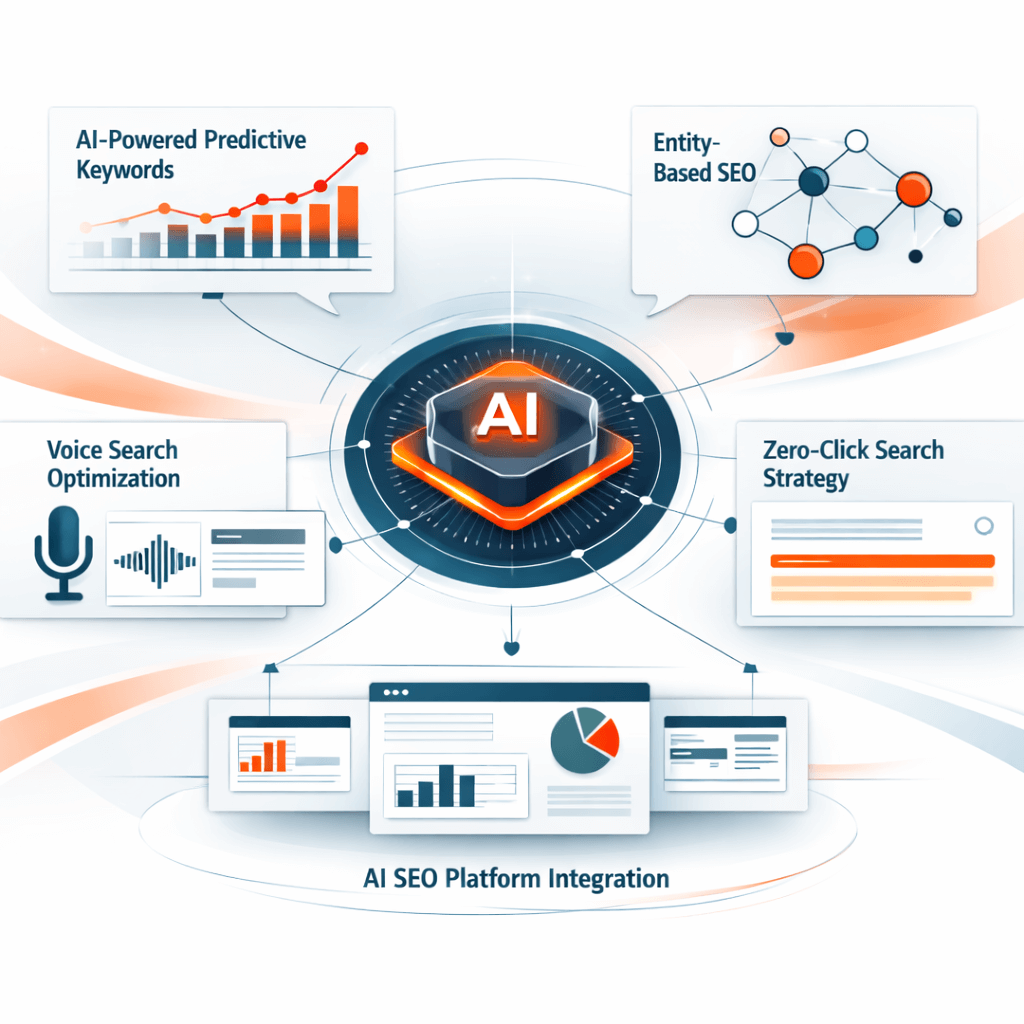
Emerging Trends in Keyword Research (2026 & Beyond)
Keyword research is evolving fast.
AI-Powered Predictive Keywords
Tools now predict future ranking opportunities.
Entity-Based SEO
Google evaluates topic relationships, not just keywords.
Voice Search Optimization
Conversational queries are increasing.
Zero-Click Search Strategy
Optimizing for featured snippets and knowledge panels.
Integration with AI SEO Platforms
Modern keyword research connects directly with AI optimization tools (see: AI SEO Tools That Can Boost Your Rankings in 2026).
Final Thoughts
Keyword research remains the foundation of SEO success, especially for agencies managing multiple clients.
Paid tools offer scalability and advanced insights.
Free tools offer accessibility and simplicity.
The smartest agencies combine both.
If you’re just getting started or want a completely free way to audit and improve website SEO performance, explore:
It’s a simple, beginner-friendly starting point before investing in enterprise-level subscriptions.
Frequently Asked Questions
Frequently Asked Questions (FAQs) is a list of common questions and answers provided to quickly address common concerns or inquiries.
What is the best keyword research tool for agencies?
Semrush and Ahrefs are top choices for advanced data. Smaller agencies may benefit from cost-effective or free alternatives like SEO Site Checker.
Are free keyword research tools accurate?
They provide useful insights but may lack deep competitor data.
How do agencies do keyword research?
Agencies analyze search intent, competitor gaps, keyword clusters, and ranking potential before creating content strategies.
What is keyword difficulty?
It’s a metric estimating how hard it is to rank for a keyword.
How many keywords should I target per page?
Focus on one primary keyword and multiple related secondary keywords.
Can I do keyword research without paid tools?
Yes, but scaling campaigns becomes challenging without advanced analytics.