
Introduction: Why Small Businesses Need a Digital Marketing Strategy in 2026
In 2026, having a website is no longer enough. Every small business whether local service provider, eCommerce store, consultant or startup, competes online.
Customers search before they buy. They compare reviews. They visit multiple websites. They look at social media profiles. If your business doesn’t show up consistently across digital channels, you’re invisible.
That’s where a digital marketing strategy for small business websites becomes critical.
A strategy ensures:
- You attract the right audience
- You generate qualified leads
- You convert traffic into customers
- You track ROI effectively
Without a structured approach, most small businesses waste money jumping between random marketing tactics.
If you’re already considering local search visibility, understanding local SEO pricing can help you plan budgets strategically. You can review a detailed breakdown here: Local SEO Packages - Cost & Best Providers in 2026
Additionally, AI-driven SEO tools are reshaping how small businesses compete. Explore modern automation strategies here: AI SEO Tools That Can Boost Your Rankings in 2026
Let’s build your strategy step by step.
What Is a Digital Marketing Strategy?
A digital marketing strategy is a structured plan that outlines how your business will:
- Reach target customers online
- Deliver value
- Convert traffic into sales
- Build long-term brand authority
It’s not just “posting on social media” or “running ads.”
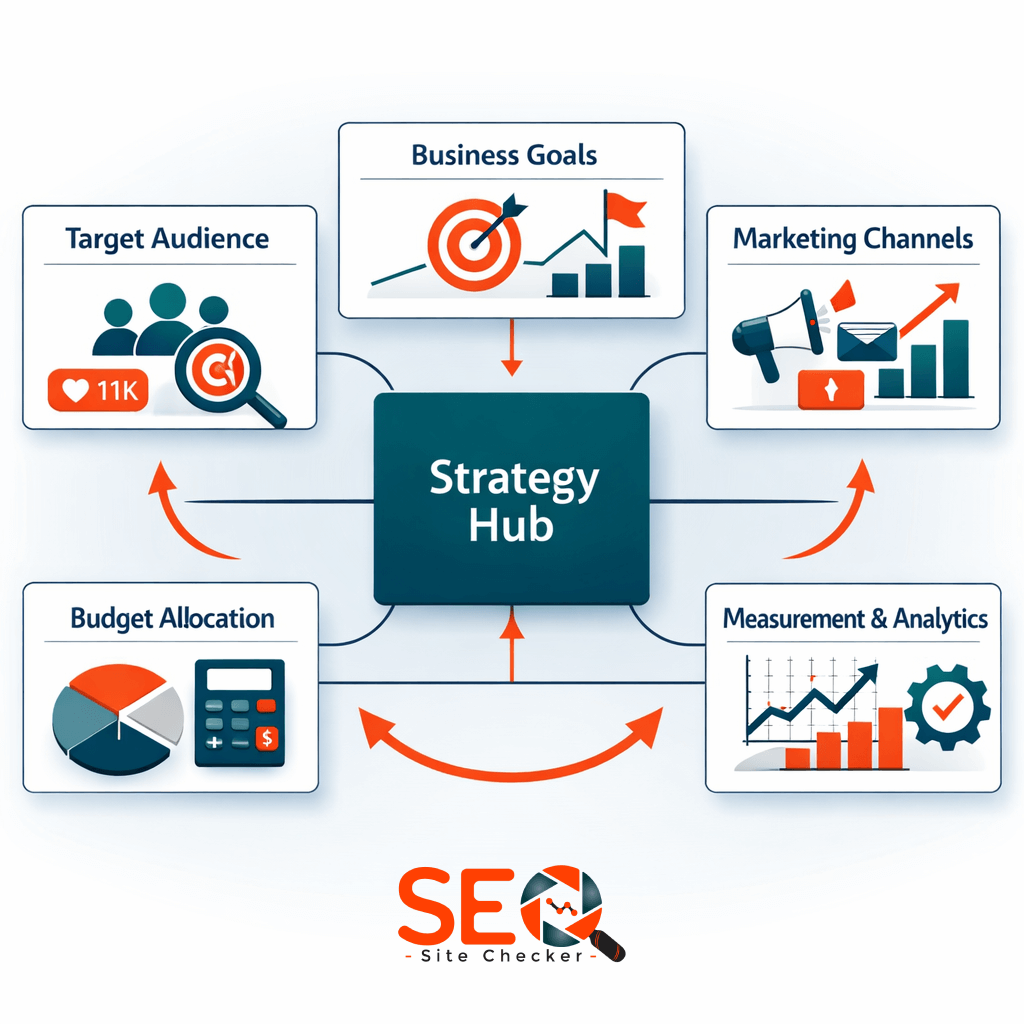
It aligns:
- Business goals
- Target audience
- Marketing channels
- Budget allocation
- Measurement systems
A strategy focuses on sustainable growth rather than short-term traffic spikes.
Step 1: Define Clear Business Goals & KPIs
Before choosing channels, define measurable goals.
Ask yourself:
- Do you want more leads?
- More online sales?
- More local bookings?
- More brand awareness?
Set SMART goals:
- Increase website traffic by 30% in 6 months
- Generate 50 qualified leads per month
- Improve conversion rate from 2% to 4%
KPIs may include:
- Organic traffic
- Cost per lead
- Conversion rate
- Customer acquisition cost
- ROI
Clear goals prevent wasted budget.
Step 2: Identify Your Target Audience
You cannot market effectively without knowing who you’re targeting.
Build buyer personas including:
- Age
- Location
- Income level
- Pain points
- Buying motivations
Understand search intent:
- Informational searches
- Comparison searches
- Purchase-ready searches
Use keyword research tools to discover what your audience actually searches for. For a breakdown of powerful research tools, see: Best Keyword Research Tools for Agencies (Free & Paid)
When you align messaging with real customer needs, conversions increase dramatically.
Step 3: Optimize Your Website (Your Digital Foundation)
Your website is the center of your digital marketing strategy.
Every ad, SEO campaign, and social post eventually leads here.
Your website must:
- Load fast
- Be mobile-friendly
- Have clear calls-to-action
- Be easy to navigate
- Build trust instantly
If your site is outdated, poorly designed, or slow, no marketing strategy will succeed.
Professional website development ensures technical stability, UX optimization, and conversion-focused design. If you’re building or redesigning your site, consider: Website Development Services
Your website is not an expense, it’s a growth asset.
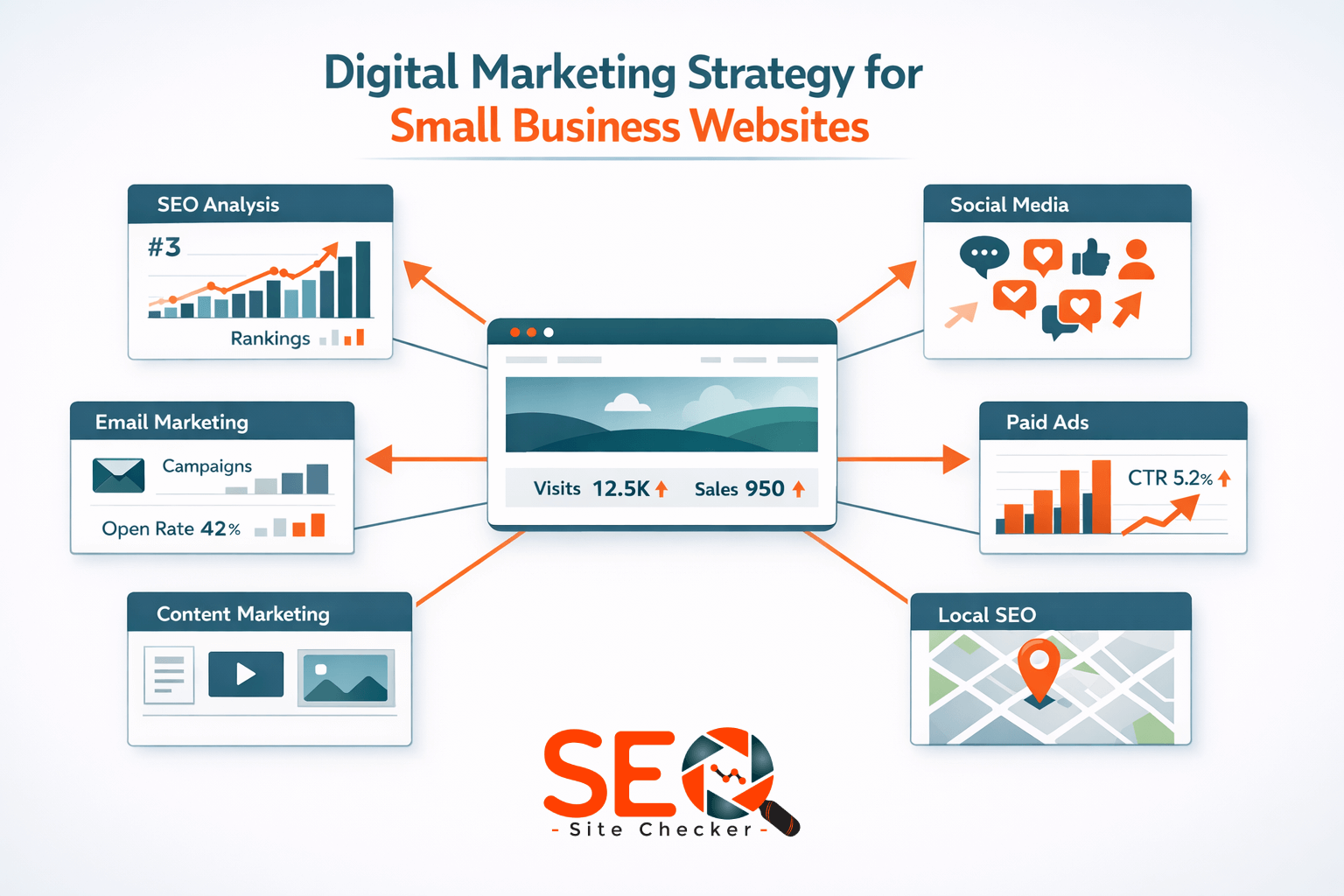
Step 4: Search Engine Optimization (SEO)
SEO is the most sustainable traffic channel for small businesses.
Unlike paid ads, SEO builds long-term visibility.
On-Page SEO
- Keyword optimization
- Proper heading structure
- Internal linking
- Optimized meta titles & descriptions
- Schema markup
Local SEO
For local businesses, local SEO is essential.
This includes:
- Google Business Profile optimization
- Local citations
- Customer reviews
- Location-based keywords
You can learn how pricing works for these services here: Local SEO Packages - Cost & Best Providers in 2026
Technical SEO
- Site speed optimization
- Mobile responsiveness
- Clean site architecture
- Secure HTTPS
If you need professional support for scaling organic traffic, explore: Search Engine Optimization Services
SEO takes time, but it generates consistent high-intent traffic.
Step 5: Content Marketing Strategy
Content builds authority and trust.
Your small business should create:
- Educational blog posts
- Service pages
- FAQ pages
- Case studies
- Video content
Good content:
- Answers real questions
- Targets long-tail keywords
- Supports SEO
- Positions you as an expert
Consistency matters more than volume.
One high-quality article per week is better than daily low-value posts.
Step 6: Social Media Marketing Strategy
Social media builds brand awareness and community.
Choose platforms based on your audience:
- Facebook → Local services
- Instagram → Visual brands
- LinkedIn → B2B services
- TikTok → Younger audiences
Focus on:
- Educational content
- Customer testimonials
- Behind-the-scenes posts
- Promotions
Organic reach builds trust, while paid promotion amplifies results.
Step 7: Paid Advertising (PPC)
Paid ads deliver immediate traffic.
Common options:
- Google Ads
- Facebook Ads
- Instagram Ads
- YouTube Ads
Use PPC for:
- Product launches
- Seasonal promotions
- Lead generation
- Retargeting visitors
Start with small budgets and scale what works.
Track:
- Cost per click
- Cost per lead
- Conversion rate
- Return on ad spend
Step 8: Email Marketing & Lead Nurturing
Email remains one of the highest ROI channels.
Build your email list using:
- Free guides
- Discount offers
- Lead magnets
- Webinars
Create:
- Welcome sequences
- Educational series
- Promotional campaigns
Automation helps small businesses stay consistent without manual effort.
Step 9: Conversion Rate Optimization (CRO)
Traffic means nothing without conversions.
Improve:
- Landing page clarity
- CTA placement
- Page speed
- Testimonials
- Trust signals
Test different versions of:
- Headlines
- Button colors
- Form placements
Small changes can significantly improve revenue.
Digital Marketing Budget for Small Businesses
A common recommendation:
- 7-12% of revenue allocated to marketing
If you’re in growth mode, you may invest more.
Budget example:
- SEO: 40%
- Paid Ads: 30%
- Content: 15%
- Tools & Software: 10%
- Email marketing: 5%
If you need strategic guidance tailored to your business size and goals, consult professionals.
Marketing Tools Small Businesses Should Use
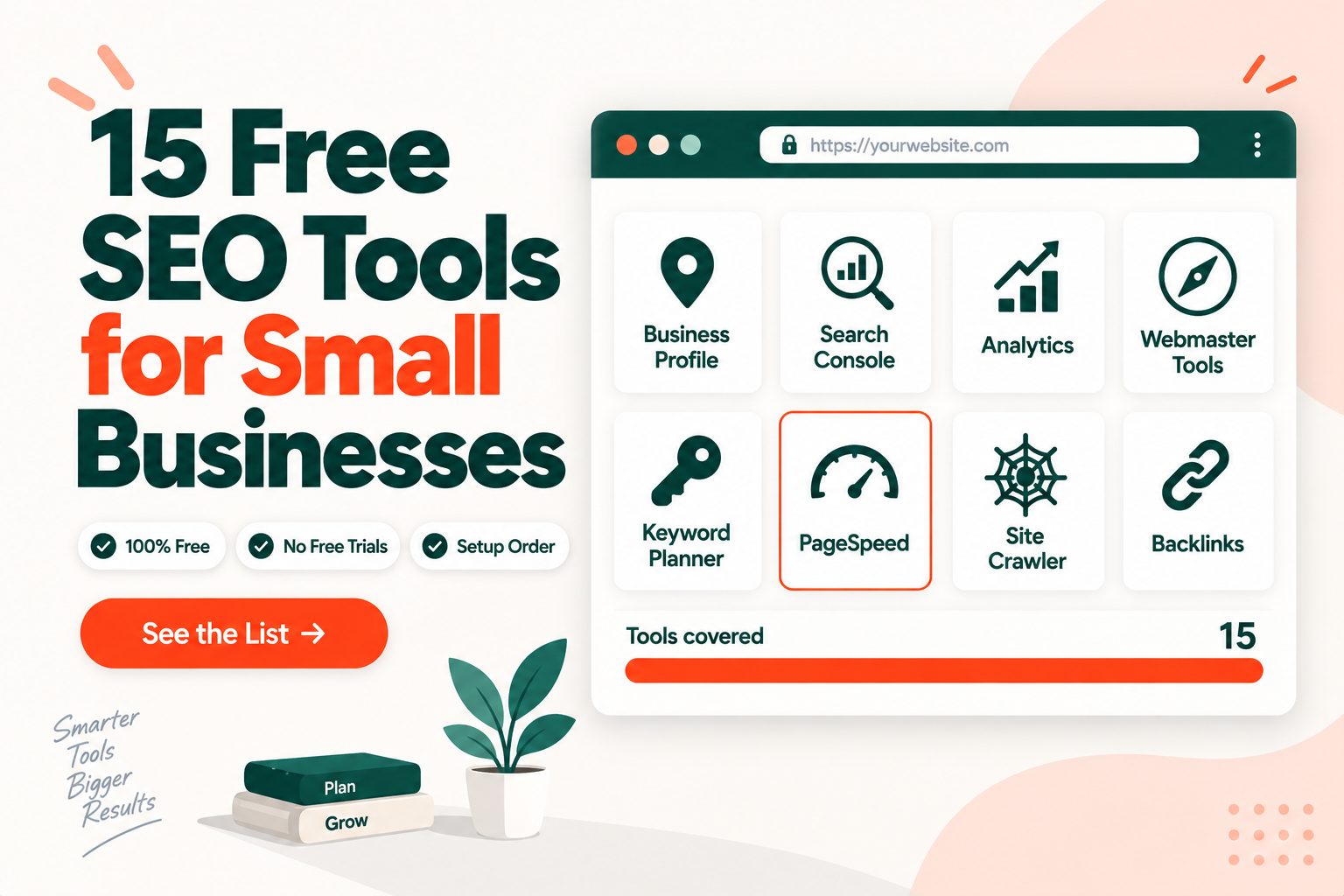
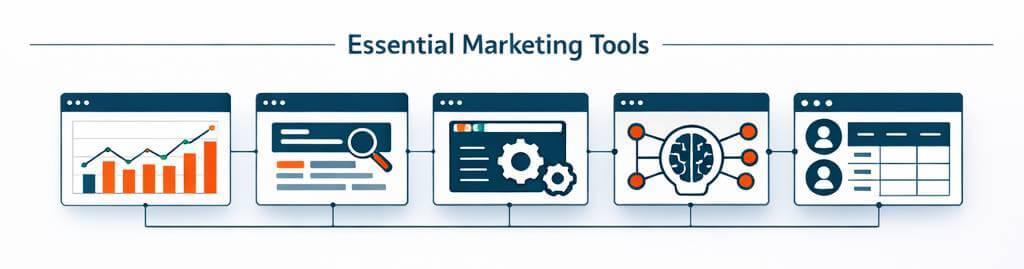
- Google Analytics
- Google Search Console
- SEO tools
- AI automation tools
- CRM systems
AI-powered platforms are especially powerful in 2026. Explore modern solutions.
Tools improve efficiency, but strategy comes first.
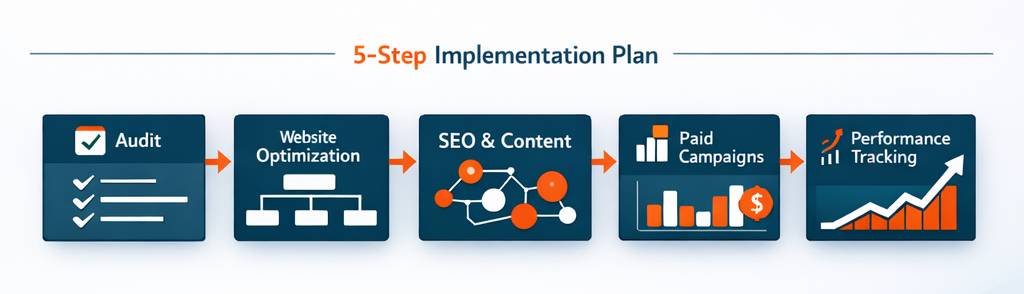
5-Step Implementation Plan
- Audit your current online presence
- Optimize your website foundation
- Build SEO + content strategy
- Launch targeted paid campaigns
- Track performance and scale winners
Consistency wins over complexity.
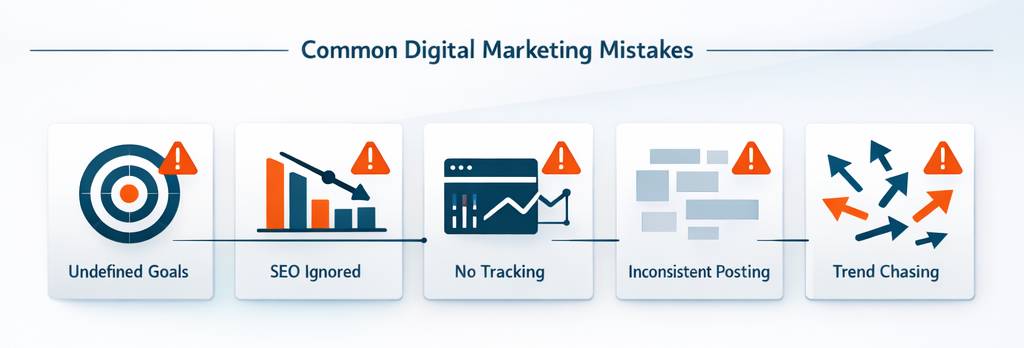
Common Digital Marketing Mistakes
- No clear goals
- Ignoring SEO
- No tracking system
- Inconsistent posting
- Chasing every new trend
Focus on systems, not shortcuts.
Final Thoughts
A successful digital marketing strategy for small business websites is not about doing everything.
It’s about:
- Choosing the right channels
- Optimizing your website foundation
- Creating valuable content
- Tracking performance
- Scaling what works
Start with strategy. Build consistently. Measure relentlessly.
Growth follows structure.
Frequently Asked Questions
Frequently Asked Questions (FAQs) is a list of common questions and answers provided to quickly address common concerns or inquiries.
What is the best digital marketing strategy for small businesses?
A combination of SEO, content marketing, local optimization, and targeted paid ads provides the best results.
How much should a small business spend on digital marketing?
Most businesses invest between 7-12% of revenue, depending on growth stage and competition.
Is digital marketing worth it for small businesses?
Yes. It increases visibility, leads, and long-term brand growth when implemented strategically.
How long does digital marketing take to show results?
SEO typically takes 3-6 months. Paid ads can deliver immediate traffic.
Can small businesses compete with big brands online?
Yes. By targeting niche audiences, local markets, and long-tail keywords, small businesses can outperform larger competitors.