SEO for Ecommerce Websites: Complete Optimization Checklist
 Kendall Chris
Feb 21 /
7 months ago
Kendall Chris
Feb 21 /
7 months ago

Introduction: Why Ecommerce SEO Is Different in 2026
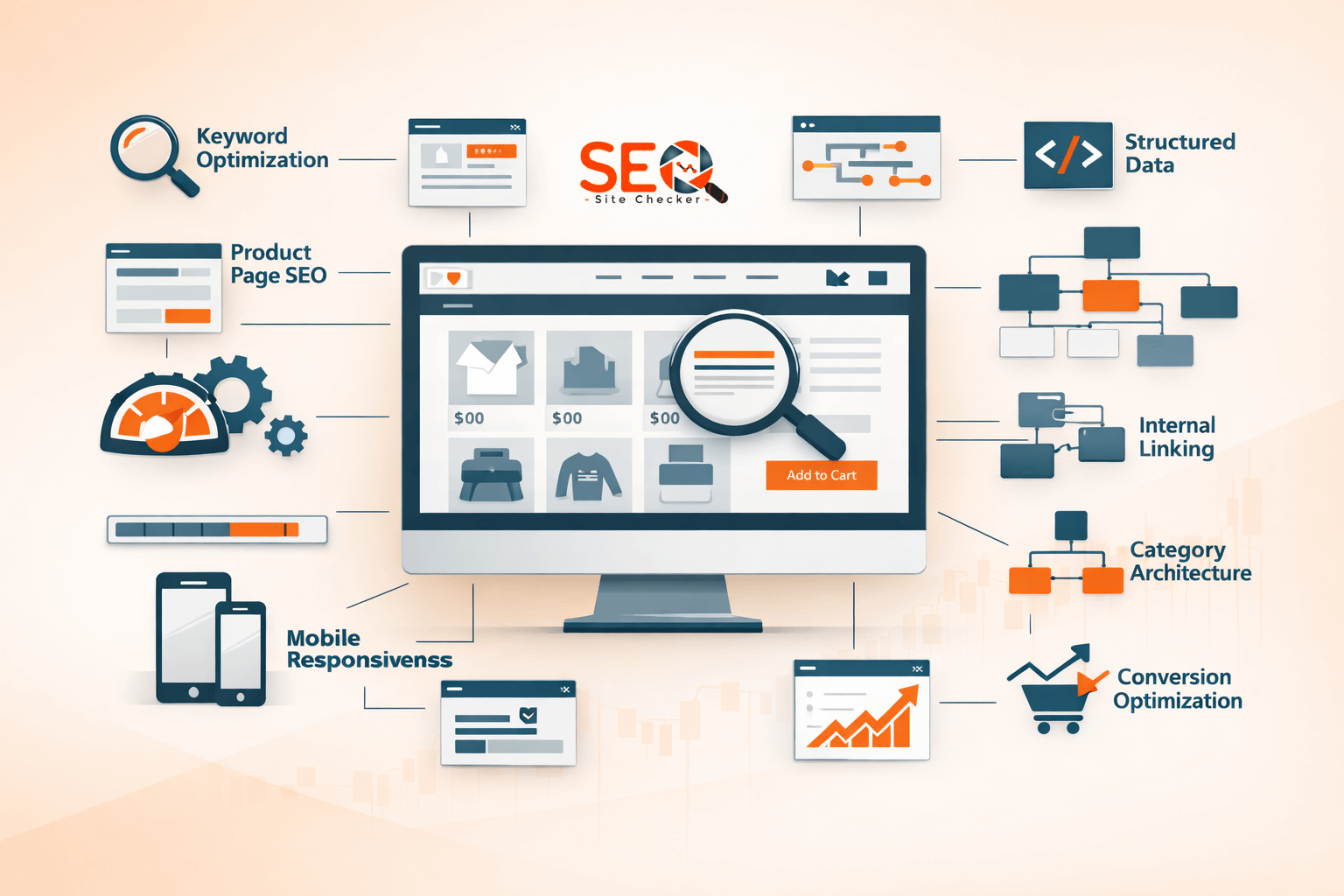
Ecommerce SEO is no longer just about ranking product pages. In 2026, it's about building search authority, user trust, technical precision and conversion alignment, all at scale.
Unlike local business websites or service-based sites, ecommerce stores often have:
- Hundreds or thousands of product pages
- Complex category structures
- Duplicate content risks
- Faceted navigation issues
- Heavy reliance on images
- Intense competition from marketplaces like Amazon
This means your SEO strategy must be systematic, scalable, and technically sound.
If you're running a small or growing store, ecommerce SEO should align with your broader marketing roadmap. If you haven't already defined that, review our guide on building a digital marketing strategy for small businesses.
Because without strategy, SEO becomes guesswork.
In this guide, we'll walk through the complete ecommerce SEO optimization checklist from technical structure to product ranking strategy.
How Search Engines Rank Ecommerce Websites
Google evaluates ecommerce stores differently than content-heavy blogs.
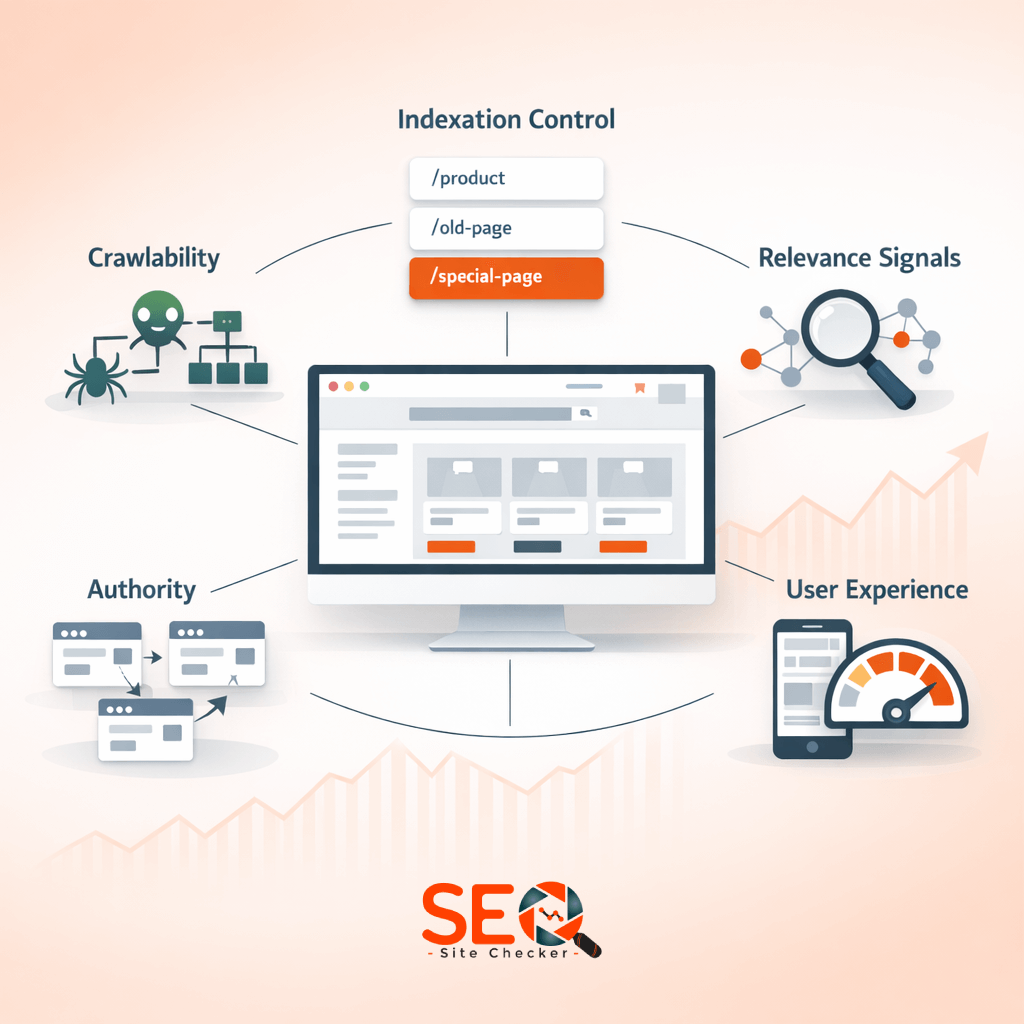
For online stores, ranking depends on:
1. Crawlability
Search engines must efficiently crawl your category and product pages.
2. Indexation Control
Not every URL should be indexed (filters, parameters, duplicates).
3. Relevance Signals
- Keyword optimization
- Content depth
- Structured data
- Internal linking
4. Authority
Backlinks remain one of Google's strongest ranking factors.
If you want to understand how link building impacts pricing and ROI, see: Link Building Services - Are They Still Worth It in 2026?
5. User Experience Signals
- Page speed
- Mobile usability
- Bounce rate
- Engagement
Ecommerce SEO is a combination of technical optimization + authority building + UX alignment.
Ecommerce Website Structure (Flat vs Deep Architecture)
One of the most common ecommerce SEO mistakes is poor site structure.
A deep website structure (too many clicks from homepage to product) weakens ranking potential.
Instead, use a flat architecture where:
- Products are reachable within 3 clicks
- Categories are clean and focused
- Internal links distribute authority
If you're unsure how structure affects SEO, read: Flat vs Deep Website Structure
Best Practices for Ecommerce Structure
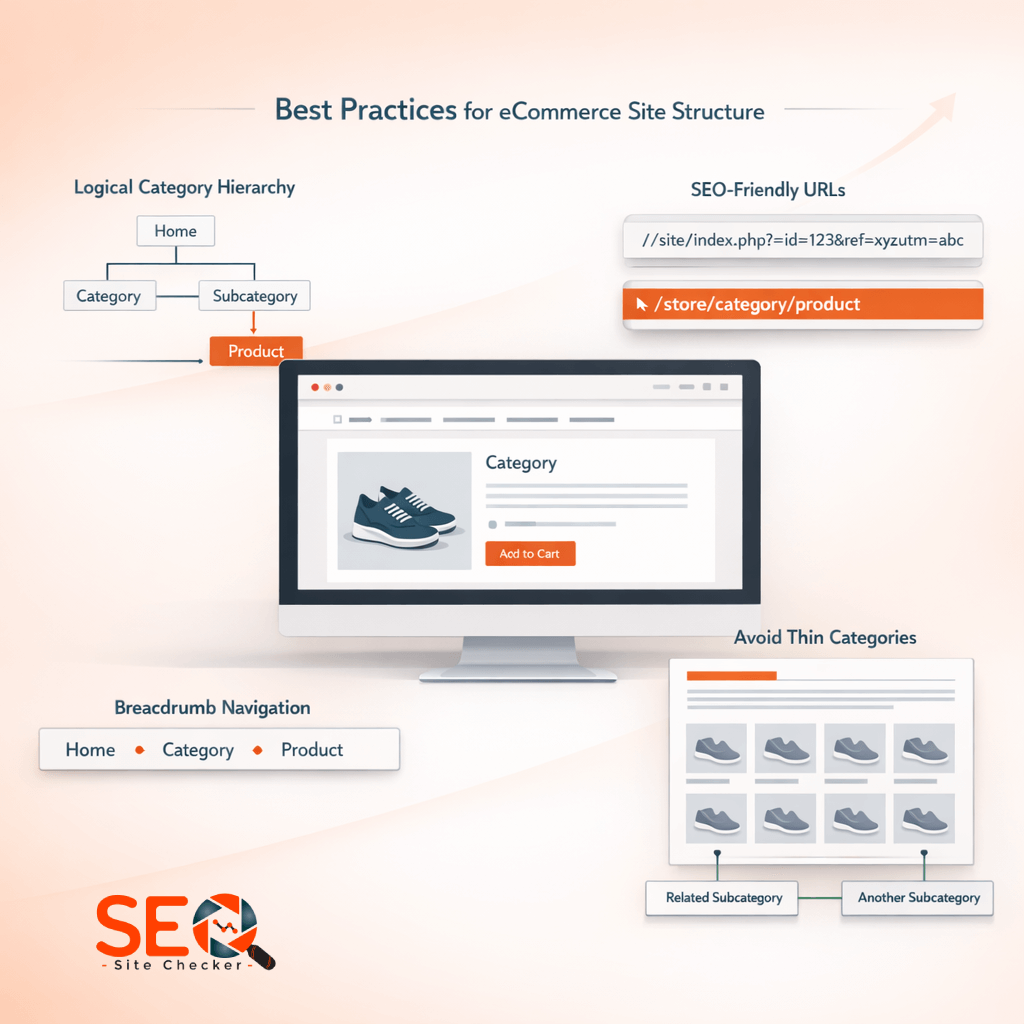
✔ Logical Category Hierarchy
Example:
Home → Men → Shoes → Running Shoes → Product
✔ SEO-Friendly URLs
Bad: example.com/product?id=98374
Good: example.com/mens-running-shoes/nike-air-zoom
✔ Breadcrumb Navigation
- Breadcrumbs:
- Improve UX
- Strengthen internal linking
- Help Google understand hierarchy
✔ Avoid Thin Categories
- Every category page should:
- Target a primary keyword
- Include 200-400 words of optimized content
- Link to related subcategories
Well-structured ecommerce sites rank faster and scale better.
Keyword Research for Ecommerce Websites
Keyword research is the backbone of ecommerce SEO.
Unlike blog SEO, you need to map keywords across:
- Category pages
- Product pages
- Blog content
- Buying guides
Step 1: Identify Category Keywords
Category pages should target:
- Broad commercial keywords
Example:
“Running shoes for men”
These have high volume and strong buyer intent.
Step 2: Optimize Product-Level Keywords
Product pages target:
- Brand + model
- Long-tail modifiers
- Purchase-intent queries
Example:
“Nike Air Zoom Pegasus 40 men size 10”
Step 3: Capture Long-Tail Informational Keywords
These drive top-of-funnel traffic:
- “Best running shoes for flat feet”
- “How to choose running shoes”
These belong in blog content that links back to product categories.
Step 4: Competitor Gap Analysis
Use tools to:
- Identify competitor ranking keywords
- Find under-optimized product opportunities
- Discover backlink opportunities
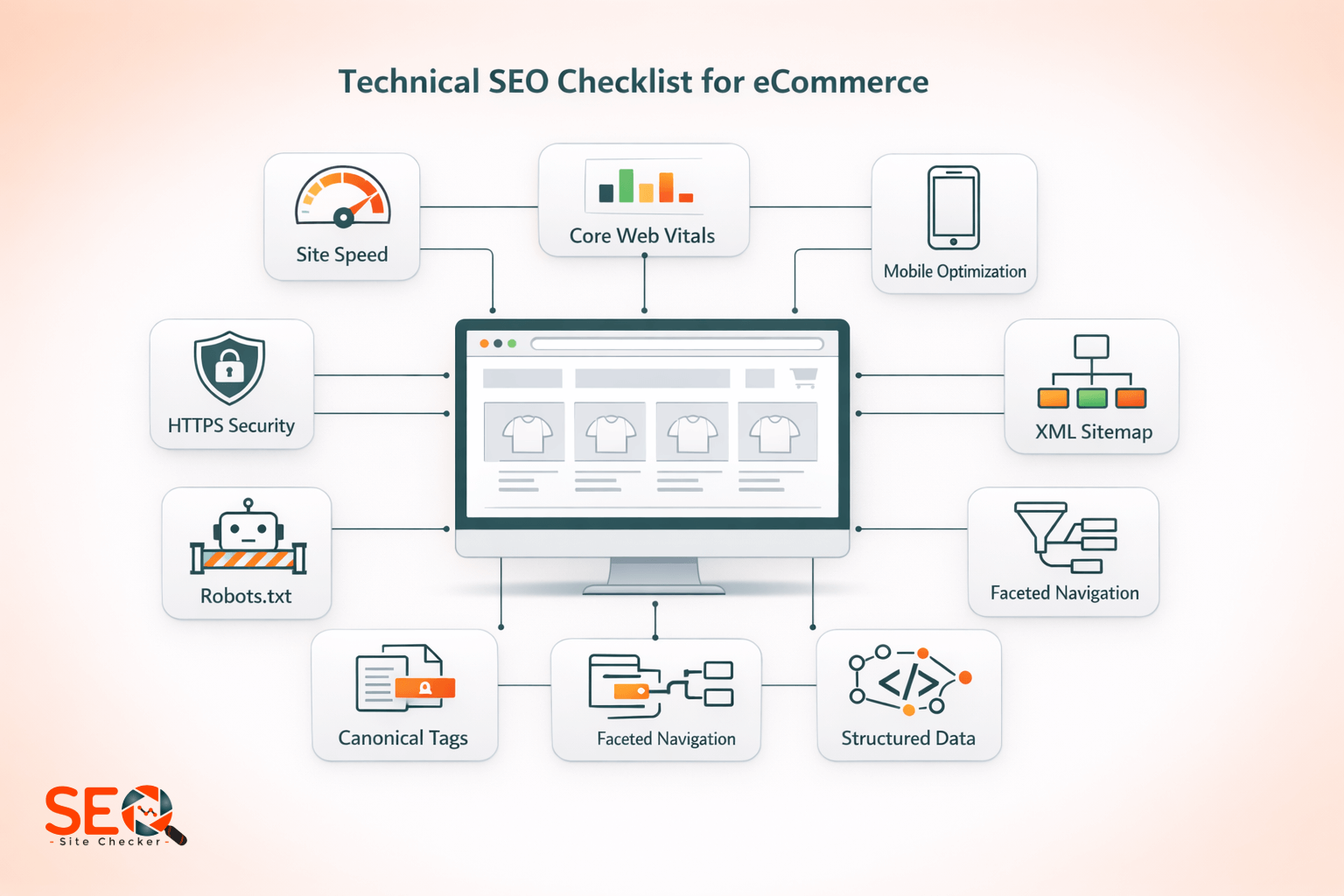
Technical SEO Checklist for Ecommerce Sites
Technical SEO is where most ecommerce stores fail.
Let's break it down.
1. Site Speed Optimization
Ecommerce sites are image-heavy. Slow pages kill rankings and conversions.
Optimize:
- Image compression (WebP format)
- Lazy loading
- Minified CSS & JS
- CDN implementation
If your hosting environment isn't optimized for performance, consider infrastructure upgrades: Reliable Web Hosting
Fast sites rank better and convert more.
2. Core Web Vitals
Google measures:
- Largest Contentful Paint (LCP)
- Interaction to Next Paint (INP)
- Cumulative Layout Shift (CLS)
Optimize:
- Server response time
- Render-blocking resources
- Image dimensions
Official guidance:
Use Google's performance documentation on ecommerce optimization (Google Search Central).
3. Mobile-First Optimization
Over 70% of ecommerce traffic is mobile.
Ensure:
- Responsive design
- Large tap targets
- Fast checkout
- Clean navigation
Google uses mobile-first indexing meaning your mobile site is your primary site.
4. HTTPS Security
Secure ecommerce stores build trust.
- SSL certificate mandatory
- Avoid mixed content errors
- Display trust badges
5. XML Sitemap Optimization
Include:
- Category pages
- Product pages
- Blog content
Exclude:
- Filter URLs
- Search result pages
- Duplicate parameters
Submit via Google Search Console.
6. Robots.txt Optimization
Block:
- Cart pages
- Login pages
- Duplicate filters
Allow:
- Product pages
- Category pages
Improper robots.txt setup can destroy ecommerce visibility.
7. Canonical Tags for Duplicate Control
Ecommerce sites often create duplicates via:
- Sorting options
- Color variations
- Pagination
- Tracking parameters
Canonical tags prevent dilution of ranking signals.
Example:
If a product exists in multiple categories, canonicalize to primary URL.
8. Faceted Navigation Management
Filters like:
- Size
- Color
- Price
- Brand
Can create thousands of crawlable URLs.
Solutions:
- Noindex filtered combinations
- Use canonical tags
- Parameter control in Search Console
9. Structured Data (Schema Markup)
Add:
- Product schema
- Review schema
- Breadcrumb schema
- FAQ schema
This improves:
- Rich snippets
- Click-through rates
- SERP visibility
On-Page SEO for Category Pages
Category pages are revenue drivers.
Yet most ecommerce stores leave them under-optimized.
Here's what to fix:
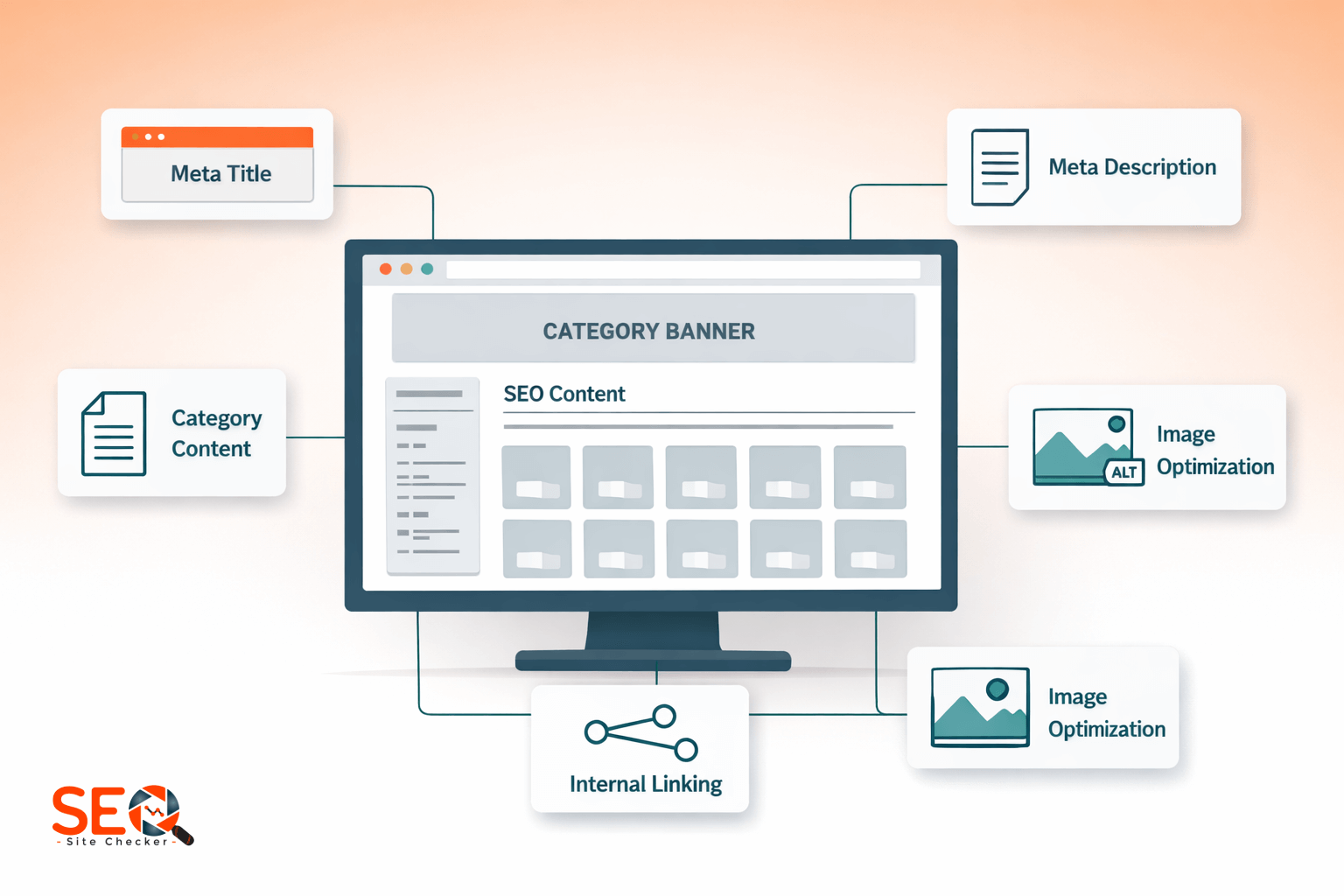
1. Optimized Meta Titles
Structure:
Primary Keyword | Brand Name
Example:
Men's Running Shoes - Lightweight & Durable | Brand
Keep under 60 characters.
2. Compelling Meta Descriptions
Add:
- Primary keyword
- Benefit
- CTA
Example:
Shop high-performance men's running shoes. Free shipping & easy returns.
3. SEO-Optimized Category Content
Add 200-400 words:
Include:
- Keyword variations
- Buying guidance
- Internal links to subcategories
- Trust signals
Avoid keyword stuffing.
4. Internal Linking Strategy
Link from:
- Blog posts
- Homepage
- Related categories
Strong internal linking improves crawl depth and authority distribution.
5. Optimized Images
Use:
- Descriptive file names
- ALT text
- Compressed images
Example ALT:
“men-black-lightweight-running-shoes”
Foundation Recap
So far, we've covered:
✔ Search engine ranking principles
✔ Website structure
✔ Keyword research
✔ Technical SEO checklist
✔ Category page optimization
This is the foundation layer of ecommerce SEO.
Product Page SEO Optimization
Your product pages are where revenue happens. Ranking them properly can dramatically increase organic sales.
1. Write Unique Product Descriptions
Never copy manufacturer descriptions.
Instead:
- Add 300-600 words of unique content
- Highlight benefits (not just features)
- Address buyer concerns
- Include FAQs within the page
Duplicate product content weakens SEO and reduces E-E-A-T signals.
2. Optimize Title Tags for Products
Format:
Primary Keyword + Brand + Key Modifier
Example:
Nike Air Zoom Pegasus 40 – Men's Lightweight Running Shoe
Keep it:
- Under 60 characters
- Unique for every product
3. Use Product Schema Markup
Add:
- Product name
- Price
- Availability
- Reviews
- Ratings
Structured data increases:
- Rich snippets
- CTR
- SERP visibility
For implementation guidance, reference:
Google's official ecommerce SEO guidelines (Google Search Central).
4. Add Customer Reviews
Reviews:
- Increase keyword diversity
- Improve trust
- Boost conversions
- Strengthen ranking signals
Encourage detailed reviews, not just star ratings.
5. Internal Cross-Linking Between Products
Link:
- Related products
- Frequently bought together
- Accessories
- Similar items
This:
- Increases time on site
- Distributes authority
- Helps crawl efficiency
6. Optimize Product Images
Use:
- WebP format
- Descriptive filenames
- ALT tags
- Compressed size
Example ALT:
“nike-air-zoom-pegasus-40-black-men”
Image SEO can drive traffic via Google Images.
Content Marketing for Ecommerce SEO
Many ecommerce stores ignore content marketing. That's a mistake.
Blog content supports category and product rankings.
What to Create
- Buying guides
- Comparison posts
- How-to tutorials
- Industry trend reports
- FAQ hubs
Example:
“Best Running Shoes for Flat Feet in 2026”
Within the article, link back to your category pages.
If you want SEO integrated into a broader marketing system, review: Digital Marketing Strategy for Small Business Websites
Content marketing increases topical authority and internal linking strength.
Link Building for Ecommerce Stores
Backlinks remain one of Google's strongest ranking factors.
Without authority, your store won't compete.
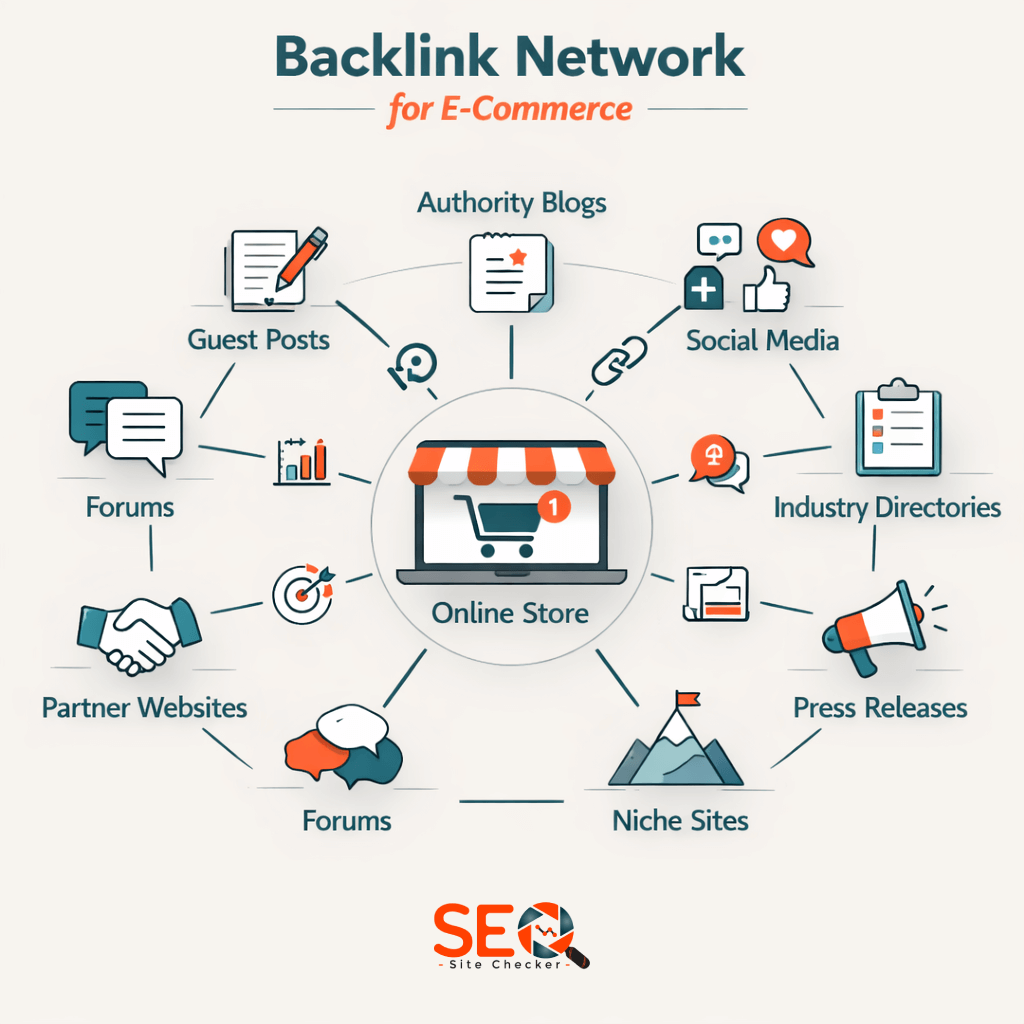
1. Product Roundup Outreach
Get featured in:
- “Best of” lists
- Industry review articles
- Gift guides
2. Influencer Collaborations
Partner with:
- YouTube reviewers
- Bloggers
- Niche influencers
Earn contextual backlinks.
3. Digital PR Campaigns
Launch:
- Data-driven studies
- Surveys
- Unique product launches
Pitch to journalists.
4. Guest Blogging
Publish on relevant industry blogs.
Focus on authority sites, not spam networks.
If you're evaluating budget and ROI, see: Link Building Services Cost
Or consider professional assistance: Search Engine Optimization Services to Grow Organic Traffic & Revenue
Strong backlinks increase domain authority and product page rankings.
Ecommerce SEO for Large Catalogs
If you manage 1,000+ products, strategy changes.
1. Manage Crawl Budget
Google won't crawl everything equally.
Prioritize:
- High-margin products
- High-search-volume categories
- Seasonal items
2. Handle Pagination Properly
Use:
- Proper rel="next" handling (where relevant)
- Logical page hierarchy
- Avoid infinite crawl loops
3. Eliminate Orphan Pages
Orphan products:
- Receive no internal links
- Rarely rank
Use site audits to fix.
4. Prune Low-Performing Products
Remove:
- Out-of-stock permanently
- Low-demand duplicates
- Thin content variations
- Consolidate authority where possible.
Conversion Rate Optimization (CRO) + SEO Alignment
Traffic without conversions is wasted effort.
SEO and CRO must work together.
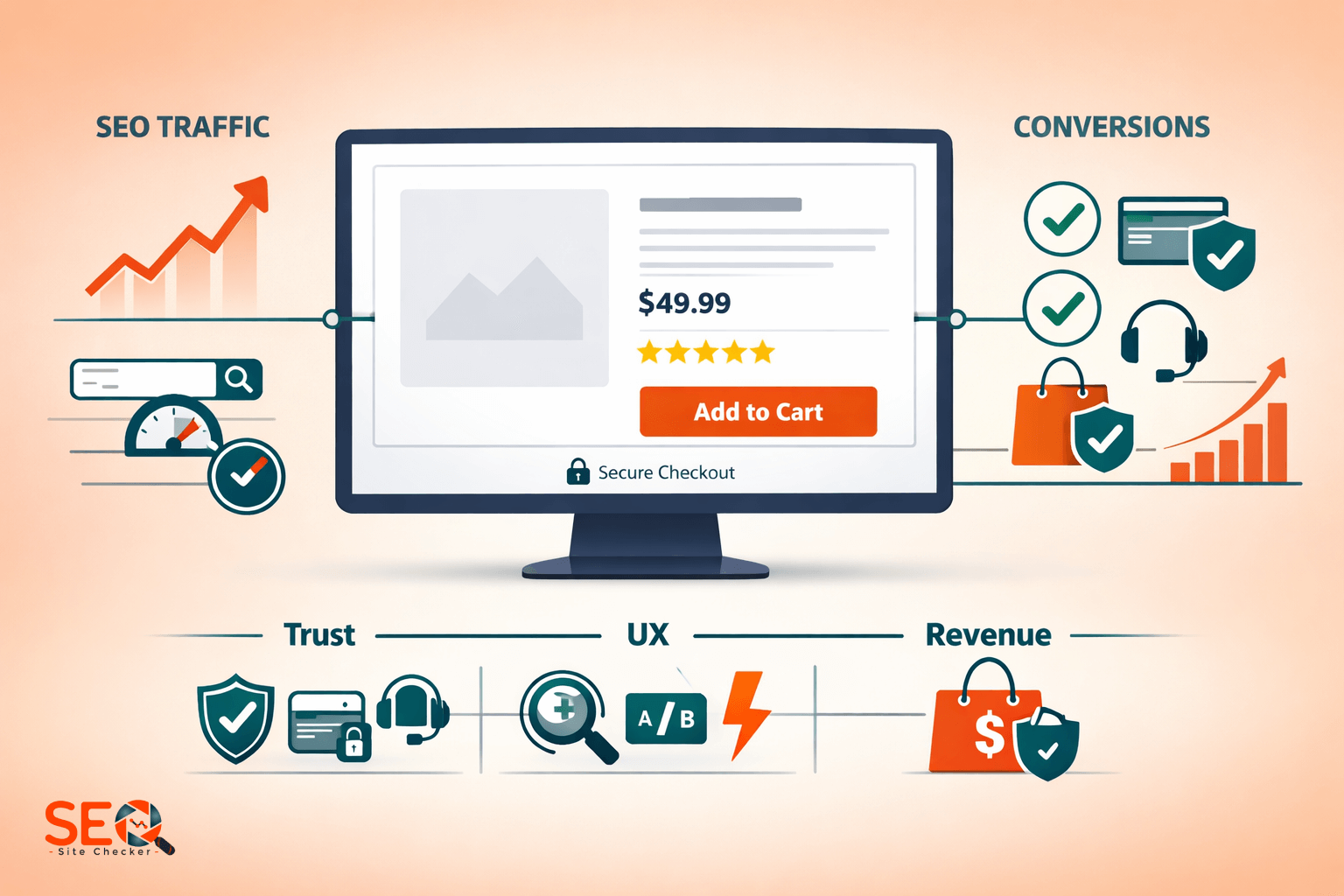
Optimize for Trust
- Secure checkout
- Trust badges
- Clear return policy
- Visible customer support
Improve Product Page UX
- Clear CTA buttons
- High-quality images
- Fast load time
- Simple navigation
A/B Testing
Test:
- Product descriptions
- CTA placement
- Pricing display
- Reviews layout
Better UX improves behavioral signals, which indirectly supports SEO.
Ecommerce SEO Tools & Infrastructure
Scaling ecommerce SEO requires proper tools and infrastructure.
Essential Tools
- Google Search Console
- Google Analytics
- Rank tracking software
- Site audit tools
- Schema generators
For technical scalability and optimized hosting environments, explore: Reliable Web Hosting
To build a complete ecosystem strategy: Discover the Power of the Nexi Bloom Ecosystem - Design, SaaS, Hosting & Publishing in One Place
Need expert support? Contact Nexi Bloom or SEO Site Checker
Infrastructure matters as much as optimization.
10-Step Ecommerce SEO Optimization Checklist
Here's your master checklist:
- Audit website structure
- Optimize category pages
- Write unique product descriptions
- Implement structured data
- Fix technical SEO issues
- Improve site speed
- Build strategic backlinks
- Create supporting blog content
- Strengthen internal linking
- Monitor performance and iterate
Follow this consistently and rankings will compound over time.
Final Thoughts
SEO for ecommerce websites is not a one-time task.
It requires:
- Strong technical foundation
- Strategic content development
- Authority-building backlinks
- Conversion optimization
- Continuous monitoring
When executed correctly, ecommerce SEO becomes a compounding growth channel that reduces dependency on paid advertising.
If you're serious about scaling your online store organically, build your strategy systematically and invest in long-term authority.
Frequently Asked Questions
Frequently Asked Questions (FAQs) is a list of common questions and answers provided to quickly address common concerns or inquiries.
How do I do SEO for an ecommerce website?
Start with technical SEO, optimize category and product pages, build backlinks, and create content that supports buying intent. Structure and authority are critical.
Is SEO worth it for ecommerce?
Yes. Organic traffic provides long-term, high-intent visitors without continuous ad spend.
How long does ecommerce SEO take?
Most stores see measurable improvement in 3–6 months, with stronger results after 6-12 months depending on competition.
What is the most important SEO factor for ecommerce?
Technical foundation + backlinks + product page optimization. All three must work together.
Does duplicate product content hurt SEO?
Yes. Manufacturer descriptions and duplicate variations can dilute ranking signals.
How do I rank product pages on Google?
Optimize title tags, Add schema, Include reviews, Build backlinks and Improve internal linking
What is the best ecommerce platform for SEO?
Platforms like Shopify and WooCommerce perform well when properly optimized. Hosting and development quality matter more than the platform alone.
How much does ecommerce SEO cost?
Costs vary based on competition, scope, and authority goals. For breakdown insights:
👉 https://seositechecker.pro/post/link-building-services-cost
👉 https://seositechecker.pro/post/link-building-services-cost
Can small ecommerce stores compete with Amazon?
Yes, by targeting niche keywords, long-tail searches, and building topical authority instead of competing on broad head terms.